Why Your Home Feels Messy (Even When You Clean It)
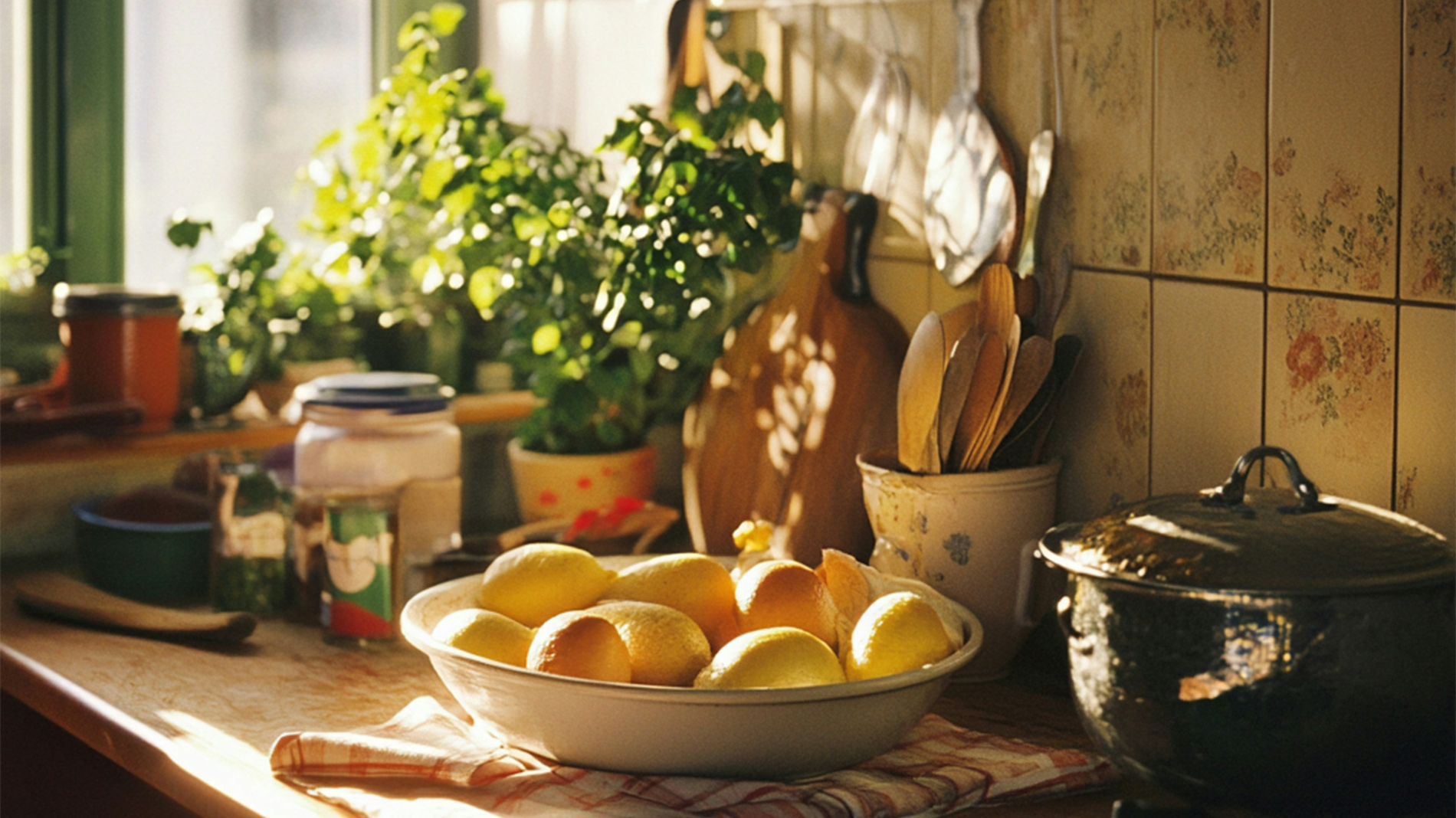
We’ve all been there. It’s Saturday afternoon. You’ve put in the work. You’ve scrubbed the baseboards, folded enough laundry to clothe a small nation, and played a high-stakes game of Tetris with the Tupperware cabinet. You stand in the center of your kitchen, sweating slightly, admiring the sparkling counters. You feel like a domestic deity.
Then, you go to the bathroom. By the time you come back, a rogue stack of mail has appeared on the island. Your toddler has turned the living room into a plastic block graveyard. Your spouse has left a half-eaten yogurt and a single sock on the coffee table.
Within four hours, the "clean" feeling is gone. By Tuesday, it’s like the Saturday Scrub never happened.
At this point, most of us succumb to one of two emotional states: Despair (assuming we are simply destined to live in a cave of chaos) or Rage (assuming our family is actively conspiring to destroy our sanity). We tell ourselves we just aren't "disciplined enough" or that we need more "willpower."
But I’m here to tell you something that might hurt a little, but will eventually set you free: You don’t have a cleaning problem. You have a system problem.
The Three Great Clutter Myths
To fix the system, we first have to deconstruct the lies we’ve been told about why our homes stay messy.
Myth 1: "I Just Need More Bins"
Go to any big-box store, and you’ll see an entire aisle dedicated to "Organization." It’s a wonderland of clear acrylic, woven seagrass, and labeled lids. We buy these things like they’re magical talismans that will ward off the clutter-demons.
But here’s the reality: A bin without a system is just a smaller place to hide a mess. If you haven't defined what goes in the bin and why it’s kept there, you’re just paying for the privilege of owning more plastic. As we discuss in the Calm Home System, simplicity must come after clarity.
Myth 2: "My Family is Lazy"
It’s easy to blame the people you live with. "If only they would just put their shoes away!" But humans are biologically wired for efficiency (which is a polite word for "laziness"). We will always take the path of least resistance.
If the "home" for the shoes is a closet behind a heavy door in a different room, the path of least resistance is the middle of the hallway. Your family isn't lazy; your environment is high-friction. You are expecting willpower to do a job that should be done by design.
Myth 3: "I’ll Be Organized Once I Have a Bigger House"
This is the most dangerous lie of all. A bigger house doesn't solve a system problem; it just gives the mess more room to grow. It’s like buying a bigger wallet when you're broke—it doesn't change the balance; it just makes the empty space feel more expensive.
The Real Culprit: Why Clutter Keeps Coming Back
If you want to know why clutter keeps coming back, you have to look at your flat surfaces. Kitchen counters, dining tables, and entryway benches are "clutter magnets" because they are the path of least resistance for Unplaced Energy.
Think about a piece of mail. You bring it inside. You don't know if you need to keep it, pay it, or shred it. That represents a Decision. Decisions require mental energy. Because your brain is tired, it decides to "place" that energy on the counter "for now."
"For now" is the birthplace of every doom pile in history.
A messy home is simply a home where too many decisions have been deferred. When you have a Properly Organized Kitchen, for example, you don't have to decide where the spatula goes. The environment has already made that decision for you.
👉 Want to fix this in your own home?
Download the free guide:
A Simple Home Upgrade Guide
Shifting from "Events" to "Operating Systems"
So, how do we stop the boulder from rolling back down the hill? We stop focusing on the act of cleaning and start focusing on the architecture of our behavior.
In the Calm Home System, we don't care if your baseboards are dusty (okay, we care a little, but it’s not the priority). We care about Friction vs. Flow.
- Stop "Tidying" and Start "Mapping": Look at where the mess accumulates. That is your evidence. If mail piles up on the counter, the system for mail is broken. Don't fight the pile; move the shredder/bin to the pile.
- The Two-Step Rule: If it takes more than two steps to put something away, it will stay out. Make the right action the easiest action.
- Close the Loops: Clutter is just a collection of open loops. A "clean" house happens when the system forces those loops to close automatically—like a "Launchpad" for your keys so you never have to "decide" where they are
The Good News: You Aren't Broken
If you feel like you’re drowning in stuff despite your best efforts, please hear this: It is not a character flaw. You are likely an intelligent, capable person who is simply operating in a poorly designed factory.
You wouldn't expect a factory to run efficiently without an assembly line, right? So why do you expect your home to run without a framework?
When you switch your focus from "cleaning more" to "building a system," the heaviness starts to lift. You stop relying on the caffeine-fueled Saturday purge and start relying on a house that actually works with you.
Ready to stop pushing the boulder and start designing your sanctuary? The first step isn't buying a vacuum or a label maker. It’s understanding the full 4-layer framework of a home that stays organized by default.
Most people try to fix their home with more effort. This guide shows you how to fix it with the right structure instead.
👉 Understand the full system here:
The Calm Home System: How to Organize Your Home for Clarity, Energy, and Flow
FAQ: The "Messy Home" Reality Check
Why does my house feel messy even when it's technically clean?
Because "clean" is a lack of dirt, but "organized" is a lack of friction. If you have clear floors but your brain is still scanning for misplaced items or unmade decisions, your nervous system will stay on high alert. You’re looking for Visual Peace, which only comes from a system.
Is it possible to be "too organized"?
Only if the organization creates more friction than it solves. If your spices are alphabetized but it takes you ten minutes to put them away, that’s not a system; that’s a hobby. A true Calm Home System is about efficiency, not perfection.
How do I get my spouse/kids to buy into a "system"?
Don't talk to them about "organization"—they’ll tune you out. Talk to them about Ease. When you move the shoe rack to where they already drop their shoes, they’ll use it because it’s easier than the alternative. You don't need their permission to make the house easier to live in!