The One Conversation That Stops the Nagging for Good
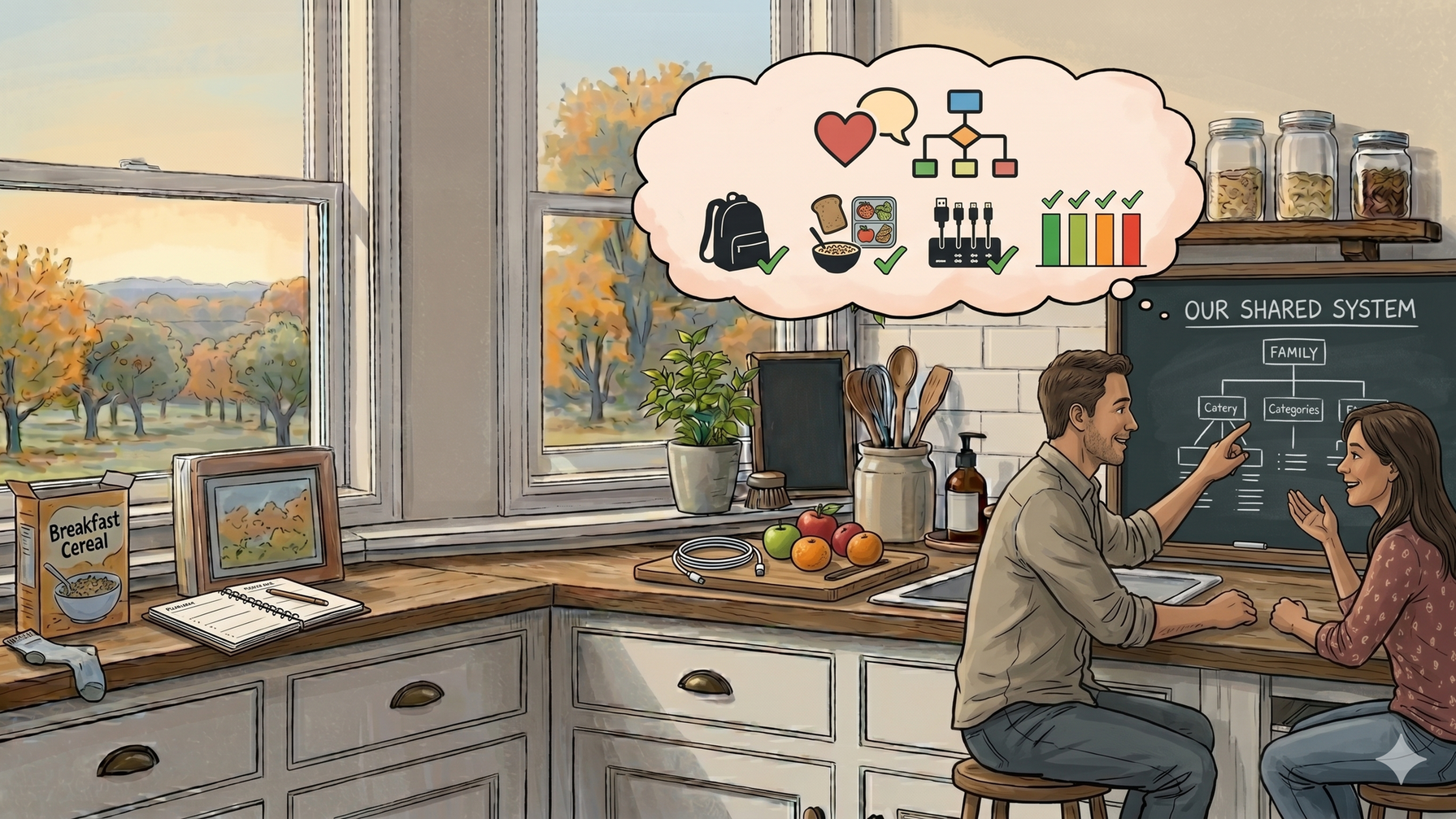
That sentence — "how many times do I have to ask?" — sounds like frustration.
But listen to it again.
It's not angry. It's tired. It's someone who has asked the same thing so many times that the asking itself has become the problem.
And here's what most people miss: it has nothing to do with how much the other person cares.
It has everything to do with structure.
The Real Problem
When a task causes repeated tension in a home, it's almost always because four things were never decided:
Who owns it. What done looks like. Who the backup is. When it happens.
Without those four things, the task lives in a grey area. And in that grey area, one person ends up being the system — the reminder, the tracker, the one who notices.
That role is exhausting. And it quietly turns into resentment.
If your mornings feel the same way, start here: Why Mornings Feel Hard Before Anything Goes Wrong
The Four Things to Define
Start with the tasks that cause the most repeated friction in your home. For each one, have one conversation and decide:
Primary owner — not 'who usually does it' but who is responsible for it, whether or not they feel like it that day.
Definition of done — this is the one most people skip. If two people have different pictures of what 'clean kitchen' means, they will argue about that kitchen indefinitely. Not because they disagree on values — but because they never compared definitions.
Backup owner — life happens. Someone is sick, someone travels, someone has a hard week. If there's no backup, the task either falls through or one person silently absorbs everything. Neither is sustainable.
When it happens — not 'at some point.' A real anchor. Tuesday evening. Sunday morning. A specific time that everyone knows.
Watch the video: The One Conversation That Stops the Nagging for Good
What Changes When You Do This
The reminder stops being necessary.
Not because people try harder. Because the structure holds the standard instead of the voice.
And when the asking stops — something else happens too. The relationship gets lighter. Conversations at 9pm stop being about who didn't do what and start being about anything else.
That's what a structured home gives you. Not perfection. Space.
Where to Start
Pick the three tasks that cause the most repeated tension in your home.
Write down the four things for each one. Share it with whoever else is involved. Revisit it once a week for the first month.
The free Home Reset Guide includes a simple responsibility mapping exercise that walks you through exactly this — one of the fastest ways to reduce friction in a busy household.