Why Mornings Feel Hard Before Anything Goes Wrong
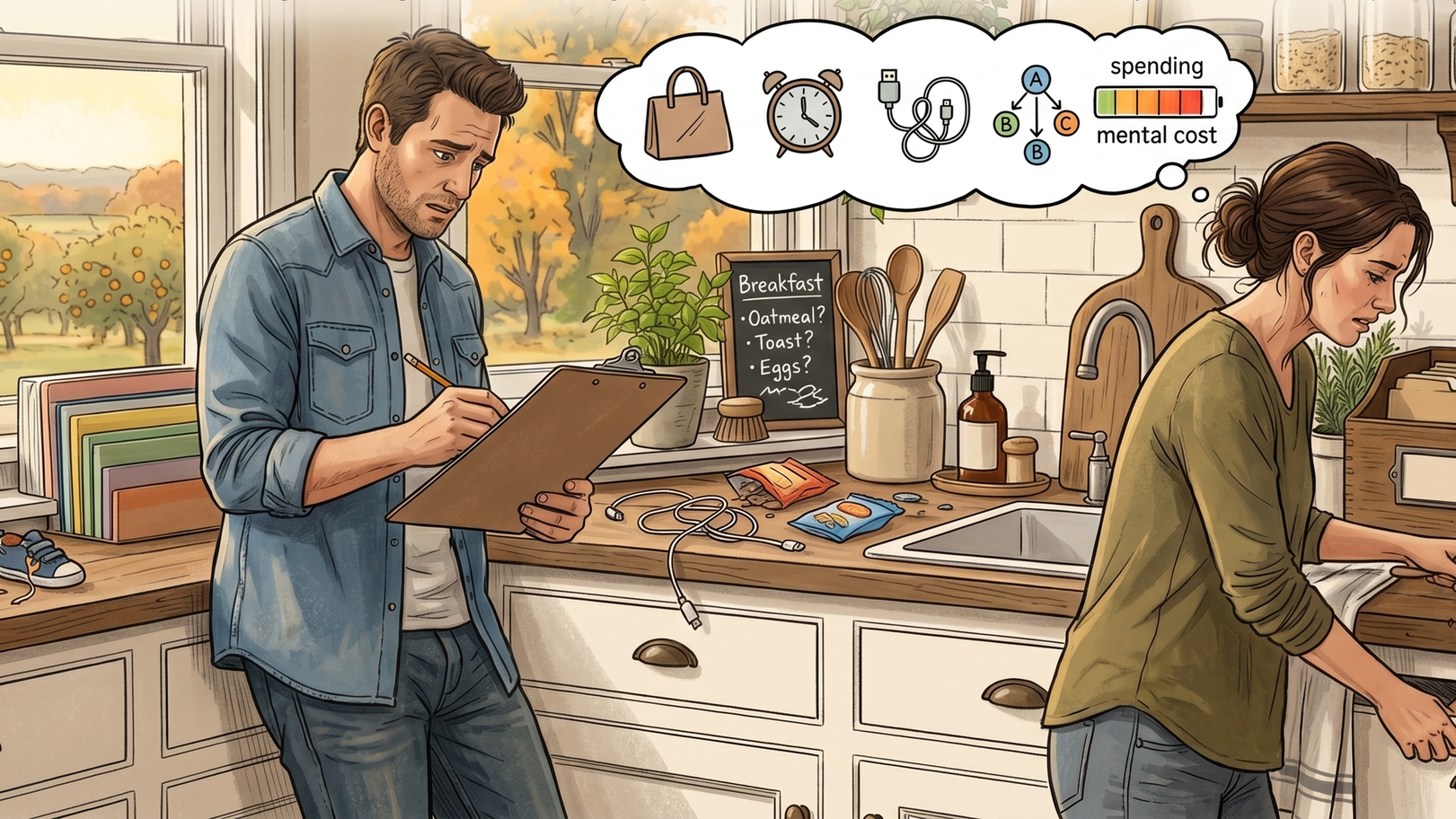
It's 7:30am. Nothing has gone wrong yet.
But the day already feels heavy.
Someone can't find their bag. Breakfast hasn't been decided. A charger is missing. Nobody's done anything terrible — but the morning is already costing you something you didn't plan to spend.
Most people assume this is just how mornings are. So they try harder. They set earlier alarms, add more steps to their routine, promise themselves they'll be more organised.
And for a few days, it works.
Then it doesn't.
The real reason mornings feel like this
It's not a willpower problem. It's a friction problem.
Friction is the small, repeated stuff that drains energy before the day has really started. The missing item. The unmade decision. The question asked for the third time this week. Each one seems minor. Together, they set the tone for everything that follows.
Your brain doesn't experience these moments once and move on. It carries them. Each small disruption adds to the cognitive load you're already carrying — and by the time you leave the house, you've already spent mental energy you needed for something else.
Where to start
You don't need to overhaul your whole morning.
Start with one zone: the entry. Give your keys, your bag, and your most-searched-for item a fixed, visible home. Do it tonight. See what tomorrow morning feels like.
That's the first step in the Home Reset — and it's exactly what our free guide walks you through.
The Home Reset Guide is free. It takes one evening to begin. And the mornings after it feel noticeably different.
Watch the video: Why Mornings Feel Hard Before Anything Goes Wrong
Why discipline fails here
Most mornings-advice tells you to be more disciplined. Wake up earlier. Build a better routine. Stick to it.
But discipline can't survive inside a chaotic environment. It's not that you're failing — it's that the structure around your morning was never designed to support you.
A messy entry zone doesn't care how motivated you are. An undecided breakfast steals decision-making capacity regardless of your intentions. The environment shapes the morning before you've had a chance to choose.
What actually changes things
The shift isn't adding more to your morning. It's removing what's working against you.
When keys have a permanent home, they're never searched for. When breakfast is decided the night before, there's nothing to negotiate at 7am. When the exit zone is staged — bag packed, shoes ready, essentials in place — leaving the house becomes smooth instead of stressful.
These aren't productivity hacks. They're friction reductions. And when friction drops, mornings don't just get easier — they feel different. Calmer. More yours.
If you recognise this tension at home, this is also worth reading: How Many Times Do I Have to Ask?